


Tel: 13504176657/0417-5828199
Contact: jimingjun
Email: jmj9577@126.com
Website: www.rlnhcl.com
Address: Yangfang village, Qinghua administrative district, Dashiqiao, Yingkou, Liaoning
The smelting reduction furnace is designed to reduce pollution, eliminate the need for coke ovens and chemical facilities, overcome various shortcomings of blast furnace ironmaking, and achieve clean production.
Classification of Melt Reduction Furnace Reduction Methods
(1) According to the process stages, it can be divided into one-step and two-step methods. One step method is the complete process of ore reduction and smelting in metallurgical reactions. The process flow is short and the equipment is simple, but there are still unresolved issues in application, such as high energy consumption and severe erosion of the furnace lining by FEO slag.
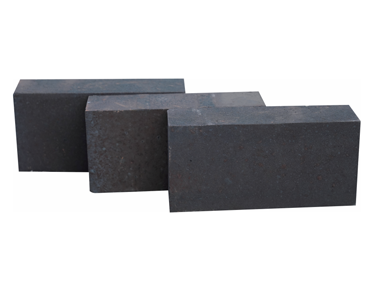
The two-step method divides the melt reduction process into solid phase pre reduction and melt state final reduction, which are completed in two different reactions, improving the usability of the melt reduction process and reducing the FEO concentration in the slag, making a breakthrough in the melt reduction method.
(2) According to energy usage, it can be divided into oxygen coal method and electric coal method. The oxygen coal method relies on the combustion of oxygen coal in a high-temperature molten pool or tuyere area to provide heat during the process, using coal as a reducing agent. Most of the currently developed processes are based on the oxygen coal method.
The electric coal method provides the heat required for the melting reduction process. Coal is a reducing agent. Electric heating conversion methods include arc heat release and plasma technology. This method is only applicable to areas with sufficient electricity and low prices.
(3) According to the type of pre reduction device, it can be divided into fluidized bed method, vertical furnace method, rotary kiln method, and flash furnace method.
(4) According to the type of final reduction device, it can be divided into vertical furnace method, current method, and rotary furnace method.
The reduction furnace usually uses clay refractory bricks, lightweight refractory bricks as insulation bricks, and the outer layer of the insulation bricks is asbestos board or aluminum silicate cotton insulation material. But it is recommended to use high alumina bricks for tank bricks and tank bricks. The furnace arch can use high alumina bricks or high alumina refractory mud, and the furnace top is laid with 50-100mm aluminum silicate cotton as an insulation layer. The bottom flue of the furnace is constructed with clay refractory bricks.
The reduction furnace shall be constructed according to the design drawings, from bottom to top, that is, from the bottom to the top of the furnace, kept horizontal, and then capped. When building the furnace, the top and bottom shall be vertical without inclination. The smaller the joint of the refractory brick, the better, and there should be no obvious unevenness on the inner surface. Therefore, it is required that the mortar used in the furnace has certain requirements and is mixed in a certain proportion (50% for raw materials and 50% for clinker), and should be adjusted evenly. No dough or lumps are allowed in the mortar, let alone foreign objects.
Generally, if the joint of the refractory brick is less than 2mm, the mortar on the surface of the refractory brick should be scraped off and dripping is not allowed. Refractory bricks shall not be exposed to rain, missing corners, or edges, and damaged refractory bricks shall not be used for furnace construction.
The refractory materials used in the smelting reduction furnace meet the working environment of various parts and extend the service life of the furnace. (1) Material selection for pre reduction furnace. Requirement: To ensure high resistance to peeling, wear, and impact, clay refractory bricks or high alumina refractory bricks should be used. (2) Material selection for final reduction furnace. Requirement: Possess the following characteristics: A. Impact resistance and wear resistance; B. Alkali metal corrosion resistance; C. The corrosiveness of iron; D. The fluidity and erosivity of iron. For devices using converters and electric furnaces, the main refractory materials are MgO-C bricks and MgO-Cr ₂ O. For vertical furnace and melt reduction furnace devices, refractory materials are mostly aluminum carbon bricks, low creep high aluminum refractory bricks, carbon bricks, and Al ₂ O Å - C-SiC bricks.
Melt reduction furnaces usually use clay refractory bricks, lightweight refractory bricks as insulation bricks, and the outer layer of the insulation bricks is made of asbestos board or aluminum silicate cotton insulation material. However, the ideal effect of tank bricks and tank bricks is high alumina bricks. The furnace arch can be tamped with high alumina bricks or high alumina refractory mud, and the furnace top is laid with 50-100mm aluminum silicate cotton as an insulation layer. The bottom flue of the furnace is constructed with clay refractory bricks.
It is necessary to repair the furnace from bottom to top according to the design drawings, that is, from the bottom to the top, keep it horizontal, and finally seal the top. When building the furnace, the top and bottom should be vertical without inclination. The smaller the joint of the refractory brick, the better, and there should be no obvious unevenness inside and outside. Therefore, it is required to have certain requirements for the mortar used in the furnace, and cooperate with a certain proportion (50% for raw materials and 50% for clinker), and adjust it evenly. No dough or lumps are allowed in the mortar, let alone foreign objects.
Generally, if the joint of the refractory brick is less than 2mm, the mortar on the surface of the refractory brick should be scraped off without any dripping phenomenon. Refractory bricks should not be exposed to rain, missing corners, or edges, and damaged refractory bricks should not be used for furnace construction.
The working environment of various parts of the smelting reduction furnace.
Common smelting reduction furnaces are divided into pre reduction furnaces and final reduction furnaces. The following are the working environments for each part of the two reduction furnaces.
1、 Pre reduction furnace.
This furnace mostly uses vertical furnaces and fluidized beds.
The pre reduction furnace material enters the furnace from the top. Due to the heating and reduction of high-temperature airflow, the temperature of the material gradually increases from top to bottom. The temperature of the upper part of the furnace is 300 ℃ -400 ℃, the temperature of the middle part of the furnace is 400 ℃ -700 ℃, and the temperature of the lower part of the furnace is 700 ℃ -900 ℃. At the same time, the refractory materials in the furnace are constantly damaged by mechanical erosion, high-temperature airflow erosion, and high-temperature thermal vibration of the materials.
2、 Final reduction furnace.
This furnace mostly uses vertical furnaces, melt reduction furnaces, electric furnaces, or converters.
The pre reduced material enters the upper part of the reduction furnace at a temperature of 800 ℃ -900 ℃ and begins to soften, reaching a temperature of 900 ℃ -1100 ℃ in the middle of the furnace. As the temperature continues to rise, the temperature reaching the lower part of the furnace is about 1500 ℃. The refractory materials on the furnace withstand mechanical erosion, high-temperature airflow erosion, thermal vibration damage, and alkali metal erosion. The refractory materials in the furnace withstand slag iron erosion, airflow erosion, and alkali metal erosion. The refractory materials below the furnace withstand slag iron erosion, flow erosion, thermal stress damage, and alkali metal erosion.
1. What is magnesium chromium brick?
Magnesium chromium bricks are refractory products mainly composed of magnesium oxide (MgO) and chromium trioxide (C, O), with periclase and spinel as the main mineral components. This type of brick has high fire resistance, high high-temperature strength, strong resistance to alkaline slag erosion, excellent thermal stability, and certain adaptability to acidic slag. The main raw materials for manufacturing magnesium chromium bricks are sintered magnesia and chromite. The purity of magnesia raw materials should be as high as possible. The chemical composition requirements for chromite are: C, O, 30%~45%, and CaO should not exceed 1.0%~1.5%. The production process of producing magnesium chromium bricks is generally similar to that of magnesium bricks. In order to eliminate the loosening effect caused by the reaction between MO and C, O, A, O, or iron oxides during the firing process of bricks to generate spinel, a synthesized co sintered material can also be used to make magnesium chromium bricks. In addition, there are unburned magnesium chromium bricks, for example, unburned magnesium chromium bricks combined with inorganic magnesium salt solutions. The production process of unburned magnesium chromium bricks is simple, cost-effective, and has good thermal stability, but the high-temperature strength is far inferior to that of fired bricks. In the late 1950s, a so-called "direct bonding" magnesium chromium brick was developed. The characteristics of this type of brick are pure raw material, high firing temperature, direct bonding between high-temperature phases such as periclase and spinel, and isolated island distribution of low melting phases such as silicate. Therefore, it significantly improves the high-temperature strength and slag resistance of the brick.
The method of using fine powder produced by co grinding and calcining chrome ore and magnesia sand to produce bricks in combination with coarse magnesia sand particles is an effective measure to eliminate the loosening effect. Compared with ordinary magnesium chromium bricks, the magnesium chromium bricks made by this method have lower porosity, higher compressive strength, load softening temperature, and flexural strength. The magnesium chromium brick made from synthesized magnesium chromium sand, which is pressed with chrome and magnesite powder and calcined at high temperature, has better slag resistance and high-temperature strength than other magnesium chromium bricks.
In addition, there are also fused magnesium chromium bricks produced by directly casting magnesium chromium materials in an electric arc furnace. The fused particles produced by the electric fused magnesium chromium materials according to the brick making process are combined with magnesium chromium bricks.
Magnesium chromium bricks are mainly used in the metallurgical industry, such as constructing open hearth furnace tops, electric furnace tops, external refining furnaces, and various non-ferrous metal smelting furnaces. The high-temperature part of the ultra-high power electric furnace wall adopts fused cast magnesium chromium bricks, the high erosion area of the refining furnace outside the furnace adopts magnesium chromium bricks made of synthetic materials, and the high erosion area of the non-ferrous metal flash smelting furnace adopts fused cast magnesium chromium bricks and magnesium chromium bricks made of synthetic materials. In addition, magnesium chromium bricks are also used in areas such as the firing zone of cement rotary kilns and the regenerative chamber of glass kilns.
2. What are the classifications of magnesium chromium bricks according to production methods?
Magnesium chromium bricks are alkaline refractory products containing 55%~80% MgO, C, O38%~20% O3, and are composed of periclase, composite spinel, and a small amount of silicate phase. Composite spinel includes spinel solid solutions such as MgAl ₂ O ₄, MgFe ₂ O ₄, MgCr ₂ Oa, and FeAl, O.
Magnesium chromium bricks developed rapidly after the 1960s due to the improvement of raw material purity and firing temperature. Currently, magnesium chromium bricks can be divided into ordinary bricks, directly bonded bricks, co fired bricks, rebonded bricks, and fused cast bricks according to different production methods.
(1) Ordinary magnesium chromium bricks
This is a traditional product that uses chrome ore as coarse particles and magnesia as fine powder. Alternatively, the two materials are composed of graded particles, and the firing temperature is generally 1550-1600 ℃. The microstructure of this type of brick is characterized by little direct bonding between chromite particles and periclase, and mostly silicate (CMS) cementation or crack isolation; There are few dissolved phases in periclase and few direct bonding in the matrix. This type of brick has poor mechanical properties and poor slag corrosion resistance.
(2) Directly bonded magnesium chromium bricks
Direct combination of magnesium chromium bricks is developed on the basis of ordinary magnesium chromium bricks, and its production characteristics mainly include two aspects: the use of purer raw materials and the use of higher firing temperatures. The so-called direct bonding refers to the direct contact between chromium ore particles and periclase in bricks, as there is less 502 in the raw material (controlled below 1%~25%), and the amount of silicate generated is low. By high-temperature sintering, the silicate is squeezed into the corners of the solid particles. Thus improving the direct binding of the solid phase.
Easy to follow - Refractory
Directly bonded magnesium chromium bricks have high high-temperature strength, slag resistance, corrosion resistance, erosion resistance, corrosion resistance, excellent thermal shock stability, and volume stability at 1800 ℃ due to their high degree of direct bonding.
(3) Co sintered magnesium chromium bricks
The characteristic of this product production process is to burn a mixture of magnesia and fine chromium ore powder in a certain proportion in a high-temperature furnace, achieving a solid-state reaction aimed at generating secondary spinel and magnesia. Chromium ore is directly combined to produce a common sintered material, which is used to manufacture sintered or chemically bonded products.
The direct bonding and microstructure uniformity of co sintered magnesium chromium bricks are better than those of direct bonded bricks. The amount of periclase desolved phase and intercrystalline secondary spinel is higher. Co sintered magnesium chromium bricks have a series of better properties than direct bonded bricks, especially known for their high temperature strength, temperature resistance, and slag resistance.
Co fired bricks can also be divided into two types. One is fully co fired bricks, with particles and fine powder being all co fired materials. Whether they are fired or chemically combined, their microstructure is basically similar. The other is partially co fired bricks, with a portion of the ingredients, such as coarse particles using co fired materials, while the fine powder can be mixed with fine chromium ore and magnesium sandpaper powder in a certain proportion into the bricks, The products fired and chemically combined in this way have differences in microstructure.
(4) Combined with magnesium chromium bricks
The magnesium chromium mixed powder is melted by the electric melting method, and through the melt crystallization, a raw material with a relatively uniform microstructure, mainly composed of magnesium chromium spinel and periclase mixed crystals, is formed. This electric melted magnesium chromium material is crushed into a certain particle size, mixed and formed, and fired to prepare rebonded bricks, or directly used as chemical bonded bricks.
The microstructure characteristics of re bonded bricks are highly direct bonding and containing a large amount of spinel desolved phases: the base crystal containing a large amount of desolved phases fundamentally changes the physical and chemical properties of periclase, such as reducing thermal expansion coefficient, improving thermal shock resistance, and improving resistance to acid alkali slag erosion. Combined bricks have similar properties as fused cast bricks, but they have better resistance to temperature sudden changes and a more uniform microstructure than fused cast bricks.
Combined with magnesium chromium bricks as a fine-grained matrix with uniformly distributed pores and small cracks, the sensitivity to temperature fluctuations is better than that of melt casting. The high-temperature performance of the product is between fused cast bricks and directly bonded bricks.
(5) Molten magnesium chromium bricks
Place the mixture of magnesia, chromium, and ore in an electric arc furnace for complete melting, and then inject the melt into a refractory mold for casting. During the solidification process, stable periclase and spinel phases are generated, while fine crystalline structures are formed. Therefore, the cast magnesium chromium bricks have excellent high-temperature strength and slag corrosion resistance.
Melt cast magnesium chromium bricks, like electric fused magnesium chromium materials, have a high degree of direct bonding and contain a large amount of spinel desolved phases. This product has high density and the slag is not easy to penetrate. Therefore, its slag resistance is better than that of direct bonded bricks, but its thermal shock resistance is worse than the above two products.
(6) Pre reaction magnesium chromium bricks
Using light burned magnesium powder and chromite as raw materials, they are finely ground into fine powder with a particle size of less than 0.088mm, pressed into raw materials or balls, and calcined at 1750-1900 ℃ to form pre reaction sintered materials. They are then produced using conventional brick making processes, crushed, mixed, high-pressure formed, and fired at 1600-1780 ℃. The main mineral composition of pre reacted magnesium chromium bricks is periclase, spinel, and a small amount of silicate, with a high degree of direct intergranular bonding. The product has a dense organizational structure, uniform composition, low porosity, high high-temperature strength, good slag resistance, and good thermal shock resistance. It can be used in the slag line of VOD furnaces, F furnaces, and other refining equipment outside the furnace.
1 Scope
This standard specifies the classification, technical requirements, test methods, quality evaluation procedures, packaging, marking, transportation, storage, and quality certificates of magnesium chromium bricks. This standard is applicable to fired magnesium chromium bricks used in industrial kilns such as non-ferrous smelting furnaces, steel refining furnaces, and cement rotary kilns
2 Normative References
The following documents are essential for the application of this document. For dated references, only the dated version applies to this document. For undated references, the latest version (including all modification orders) applies to this document.
GB/T 2992.1 Shape and Dimensions of Refractory Bricks - Part 1: General Purpose Bricks
GB/T 2997 Test Methods for Bulk Density, Apparent Porosity, and True Porosity of Dense Shaped Refractory Products
GB/T 5070 Chemical Analysis Methods for Chromium Containing Refractory Materials
GB/T 5072 Test Method for Room Temperature Compressive Strength of Refractory Materials
GB/T7321 Method for Preparation of Shaped Refractory Products Test Specimens
GB/T 10325 Sampling and Inspection Rules for Acceptance of Shaped Refractory Products
GB/T 10326 Inspection Methods for Dimensions, Appearance, and Cross Sections of Shaped Refractory Products
GB/T 16546 Packaging, Marking, Transportation, and Storage of Shaped Refractory Products
GB/T 17912 Shape and dimensions of refractory bricks for rotary kilns
GB/T 18257 Hot Surface Marking of Refractory Bricks for Rotary Kilns
GB/T 20511 Classification Rules for Refractory Products
YB/T 370 Test Method for Load Softening Temperature of Refractory Products (Non Differential Temperature Rise Method)
YB/T376.1 Experimental Method for Refractory Medium Frequency Thermal Shock Resistance (Water Quenching Method)
YB/T376.2 Test Method for Thermal Shock Resistance of Refractory Products (Air Quenching Method)
The terms and definitions defined in GB/T 10325 and the following terms and definitions apply to this document
3.1 Directly bonded magnesia chrome bricks refer to refractory products made from high-purity magnesia and chromium concentrate as the main raw materials
3.2 Electric fusion combined with magnesium chromium bricks refers to refractory products made from electric fusion magnesium chromium sand as the main raw material
3.3 Electric melted semi combined magnesia chrome bricks refer to refractory products made from electric melted magnesia chrome sand, sintered magnesia sand, chromite ore, or pre reacted magnesia chrome sand
3.4 Ordinary magnesium chromium bricks refer to refractory products made from ordinary magnesium sand and general refractory grade chromium ore as raw materials.
Tel:
13504176657
Landline: 0417-5828199
Email: jmj9577@126.com
Address: Yang Fang Cun, Qinghua administrative district, Dashiqiao City, Yingkou City, Liaoning Province


